Philippines quake survivors struggle without food or shelter
Survivors of Philippines earthquake left in despair with no food or shelter
A strong earthquake of magnitude 7.4 struck the Mindanao region of the Philippines on Friday, causing widespread destruction and fear among residents. This earthquake came just hours after a smaller 6.7-magnitude quake hit the same region. People in affected areas were shaken by hundreds of aftershocks overnight, leaving many scared to return to their homes. Philippine authorities confirmed at least eight deaths so far, though the full extent of damage is still being assessed.
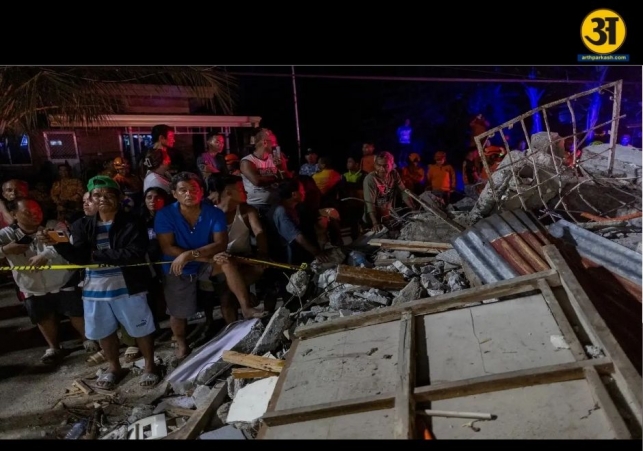
The twin quakes hit coastal areas of Mindanao, forcing residents to sleep outdoors to avoid being crushed by collapsing buildings. In Manay, a municipality of about 40,000 people, locals worked on Saturday morning to clear debris and clean up broken glass from their homes and shops. Many homes, small stores, and government buildings were badly damaged, leaving families with nowhere to sleep, no electricity, and very little food.
Resident Ven Lupogan told AFP, “Our small house and store were destroyed. We have nowhere to sleep. There's no electricity. We have nothing to eat.” The destruction follows another strong earthquake just two weeks ago in Cebu, which killed 75 people and damaged nearly 72,000 houses, highlighting the region’s vulnerability to seismic activity.
Life disrupted as residents seek safety
In Manay, some people set up makeshift shelters in tents, under tarps, in vehicles, or on mats laid out in parks and streets. The government hospital in Manay was heavily damaged, so patients had to be moved outside for treatment. Shopkeepers cleaned broken glass and salvaged merchandise, while families struggled to save personal belongings from collapsed homes.
Vilma Lagnayo, a local resident, said, “Reconstructing our home is difficult now… Money is a problem.” Local officials are trying to provide support, but the area’s infrastructure was badly affected, and the scale of the disaster has made immediate relief challenging.
The Philippine seismology office reported more than 800 aftershocks since the initial quake, warning that these tremors could continue for weeks. Mindanao is located on major fault lines, making it prone to frequent earthquakes. Residents remain wary, fearing further destruction.
In Mati, another coastal town about two hours from Manay, families held a wake for a relative who had recently died, even as tsunami warnings kept neighbors away. Margarita Mulle, a resident, said tearfully, “In case something happens, they will carry the body using a ‘tora-tora,’” referring to a local hand tractor-drawn cart often used in rural areas.
The Philippines is part of the Pacific “Ring of Fire”, an arc of intense seismic activity stretching from Japan through Southeast Asia and across the Pacific Ocean. Earthquakes are a near-daily occurrence, making preparedness essential.
ALSO READ: AIIMS Delhi performs India’s first robotic kidney transplant on patient with renal failure
ALSO READ: Upcoming fighter jets set to modernize the Indian Air Force by 2035
Past disasters highlight risks
The region has a history of deadly earthquakes and tsunamis. In 1976, an 8.0-magnitude quake off Mindanao’s southwest coast triggered a tsunami that killed or left missing around 8,000 people, marking the Philippines’ deadliest natural disaster. This historical event underscores the continuing risk to coastal communities in Mindanao.
Authorities are working to assess damage, provide aid, and ensure safety, but survivors are still struggling. Many families have lost homes and basic necessities, while local hospitals and relief centers are overwhelmed. The government and aid organizations are coordinating relief efforts, including temporary shelters, food distribution, and medical support for those affected.
The twin quakes have also raised concerns about tsunami risk, though warnings have been lifted in most areas. Residents remain cautious as aftershocks continue, making normal life extremely difficult. Experts warn that such seismic events can have long-lasting effects on communities, damaging infrastructure, disrupting services, and leaving families vulnerable.
Despite the devastation, locals have begun clearing debris and helping each other rebuild, showing resilience in the face of repeated natural disasters. Emergency services continue to monitor the situation, and the government has urged residents to stay alert to aftershocks and follow safety instructions.
In conclusion, the Mindanao earthquakes have left many people in despair, with homes destroyed, electricity cut off, and food scarce. The ongoing aftershocks and vulnerability of the region highlight the need for strong disaster preparedness and response measures. Residents, authorities, and aid agencies are working together to provide relief and restore basic services while ensuring the safety of those affected.
Related News